
Greg Bennett: The Making Of An Iconoclast by Bill Harper
- Greg Bennett

- Mar 3, 2025
- 9 min read
Updated: Mar 4, 2025

My first interview with Greg Bennett in 2001 was a real eye-opener. He told me how he’d started a little-known agency named Luna Bacardi Group in 1990, and within the decade Promo Magazine had ranked it the #3 promotional agency in the U.S. With over $100 million in billings and 11 offices domestically and abroad, they were one of the largest privately-held brand promotional agencies in the world. Their walls were covered with creative awards, more than 60 from the top domestic and foreign competitions. Their clients were some of the best-known brands and retailers. Luna Bacardi was a groundbreaker.
Years passed and I got to wondering where Greg’s entrepreneurial spirit had taken him next. He was easy to find, but not so easy to pin down. I had read in the trades that he’d been lured to New York by CBS to start up their very first branded and digital entertainment division. I called his office in Manhattan requesting a follow-up interview, and though we tried to arrange one several times during his frequent trips to Los Angeles overseeing the brand integrated marketing for some of CBS Distribution’s most popular shows (“Dr. Phil”, “Oprah”, “Entertainment Tonight”, “Rachel Ray”, “Inside Edition”, Judge Judy”, and “The Doctors”), his trips were always such whirlwind affairs that the interview never came to pass.
Then, this summer—totally out of the blue—Greg called me. He said he had left CBS to start yet another business, this one with the intriguing name Iconoclast Brand Marketing and Entertainment. He was coming to L.A. for a concert he’d helped organize at Nokia Theater benefiting The City of Hope, and he could see me the next day. “If you want to hang with me while I do some business,” said Greg, “we’ll do the interview in between stops. But there’s one condition. You get to be the chauffeur.” It was too good to pass up.

Our day started at his new satellite office for Iconoclast on trendy Montana in Santa Monica, and I had just parked my car when a taxi dropped Greg off out front, just a briefcase and an overnight bag in hand. After the prerequisite greeting and some small talk, he took me upstairs to tour the new office he was seeing for the first time.
“We’ll be all moved in and ready for business by the end of the week,” says Greg, as he settles in behind his new desk and invites me to be the very first to try out the new client chair. Then he got right to the point: “Everything I’ve done so far, everything I’ve learned, all the experience I’ve gathered in the brand marketing and entertainment business has led me to this point. Iconoclast will be the first brand marketing and entertainment agency of its kind. All through my last year at CBS I felt this new venture evolving. All through my last year at CBS I felt this new venture evolving.
I nurtured the idea by collecting input from corporate CMOs, brand consultants, and the presidents of major media companies and ad agencies. I knew we could do things better if we could just break the tired advertising and marketing mold, if we could show our clients new, innovative ways to manage their brand assets. I’ve always been a brand marketer at heart, and this is the next logical step. You know what an Iconoclast is, right?” I had looked the word up in the dictionary the night before, so I recited the standard definition. Greg hands me his new business card and tells me to turn it over. I read the following:
I • CON • O • CLAST (noun)
Person who is not afraid to look at beliefs or institutions in a different way— A voyager not seeing new landscapes, but seeing it with new eyes. Person who cannot be told, “It can’t be done.”
I chuckled. In true iconoclastic fashion, Greg had molded the definition to suit his own meaning. “That’s where we’re going,” says Greg, “but let me tell you, this journey first started when I founded Luna Bacardi back in 1990. We did so many things that had never been tried. When Sprint was starting to roll out their new digital technology, they came to us to handle the promotional aspects of their launch. Ultimately, we got them into every major retailer and helped put the first Sprint PCS stores inside Radio Shacks. We partnered with Chiat/Day, one of the best consumer agencies in the world on the Taco Bell account and came up with the Taco Bell talking Chihuahua. It was monster big. In 1995, our Keebler promotion was recognized as one of the best in the world. We were big brand builders, but not in a conventional sense. Instead, we showed our clients how to weave their promotional activities into the fabric of their big-dollar media expenditures. That’s what we called brand building, and our clients liked the results.”
Greg rubs his forehead in thought for a few seconds, then says, “But I think some of the most important stuff we did back then was when we went to work for Sony and Paramount. That’s where we learned a lot, because promoting a movie can be a lot like promoting packaged goods or services, except it moves so much faster, there’s so much urgency. You have to motivate consumers to try the movie just like you have to induce consumers to pull a can of beans off a shelf. But the promotions have to really work—and work right away—because opening weekend can make or break a movie. We learned to move very fast over short periods of time. We did TV, radio, print, Promotions, billboards and trailers for big studio movies like ‘Zorro’, ‘Godzilla’ and ‘Evita’. In all, we spent eight years launching movies for Sony.”I’m writing this last tidbit down when Greg says, “We better hit the road.”
Our first stop is the downtown office of a brand manager for a prospective new client. As we’re rolling down Olympic Boulevard, Greg points to a building and says, “That’s where I started Luna Bacardi. I sold the agency to a major holding company in 1999 and had to stay on as Chief Marketing Officer for three years. We did some fabulous work, very effective, but I didn’t want to be a cog in a giant wheel anymore. When I was finally able to leave, I put my brand marketing cap back on and started O! Branded Entertainment. Starting O! was the right move and the timing was perfect because we picked up one of the most satisfying assignments I’ve ever had. O! was hired as co-Executive Producer and marketing coordinator for the concert celebrating the end of apartheid in Johannesburg, South Africa. We had U2, Phil Collins, huge acts from all over the world. This show was a major global event, simulcast on cable news networks, and we helped pull together the global marketing effort.”
"We’re just pulling onto the 10 Freeway heading downtown, when Greg’s iPhone chirps. He looks at the screen and says, “Got to take this one.” Greg talks for a few minutes, switches off and says, “Gloria.” “Who?” “Estefan,” says Greg. “She performed at our concert. Introduced me to Placido Domingo last night. We’re trying to sign him to do a benefit for Strive, a jobs initiative in New York. We’ll see.” Then, just like that, he picks up where we left off.
“The work we did at Luna Bacardi, O! and CBS really set the stage for everything I’ve been doing since. And plan to do. Everybody was talking about integrated marketing back then, but we were already successfully pioneering the first truly integrated branded entertainment, combining in-show content, digital, ecommerce, even retail activity, PR and sweepstakes. Did I ever tell you about the work we did for Caress Body Wash?”
I shake my head and Greg tells me the fascinating story of “The Caress Confidant”. In 2005, Caress was an everyday Midwestern soap in the midst of a total repositioning. They came to O! asking them for a tent pole idea around which they could launch their entire campaign, an idea that could turn their languishing brand into a cool women’s body wash with plenty of cachet. The O! team responded with what turned out to be a mini reality series on “Entertainment Tonight”. Contestants were invited to make a video of themselves interacting with the new Caress Body Wash bottle. The winner would become The Caress Confidant, and she’d be flown first class to Hollywood for a week of festivities including The Emmy’s and events surrounding the show. The prize also included a luxury hotel suite, limo, private secretary, dietician, personal trainer, make-up artist, and stylist. She would attend private pre- and post-parties, walk the red carpet, and enjoy her place in The Emmy’s audience, all so she could share with the “Entertainment Tonight” viewers what it was like to live the life of a celebrity. “Talk about legs,” says Greg, “The Caress Confidant turned into a twelve-week continuing segment on ‘Entertainment Tonight’. Their viewers watched the call for entries, some of the best videos, the winner’s selection, and then the whole winning experience out in Hollywood.” Now Greg smiles as he adds, “Pretty effective, too. Caress Body Wash got a 30% year-to date sales increase.”
Greg shifts gears and is just launching into another success story, when we pull into the parking garage of the building where the prospective client is located. Greg says, “Sorry, buddy, but I’ve got to fly this one solo,” so I drop him off at the elevators to go to his meeting. Meanwhile, your intrepid interviewer is cooling his heels with his laptop at the Starbucks across the street.
An hour later, we’re back on the Hollywood Freeway heading west, where we’ll drop down to DreamWorks in Hollywood. Greg tells me that O! did the rollout for their 2005 release of “Madagascar” and today he’s meeting with their brand marketing division.
“It’s the work we did at O! that got the advertising and media industry’s attention,” says Greg. “CBS came calling and wanted me to come to New York to set up their very first branded entertainment division. It was exciting. I was the lead in the integrated brand marketing of three Emmy-award-winning shows, ‘Entertainment Tonight’, ‘Rachel Ray’ and Dr. Phil’s ‘The Doctors’. In no time, we became the most recognized and influential branded entertainment unit of any network. People were calling us a powerhouse, a real juggernaut.”
"Greg was now luring major clients like WalMart, Staples, CVS, Bayer, Welch’s, Geico, State Farm, M & Ms, and Capital One to his CBS shows with the promise of his unit’s ability to produce groundbreaking, in-show content with integrated digital extensions on their websites.
“We really had fun with the Geico Caveman,” says Greg, telling me how he pitched his idea in true Hollywood fashion to the Geico executives. “They wanted to maximize the potential appeal of the characters from their TV spots, so I tell them let’s do the Geico Caveman meets Andy Rooney. We’ll do 90-second segments on ‘Inside Edition’ with Deborah Norville where the Caveman is doing this Andy Rooney type bit a la ‘60 Minutes’, commenting on human social issues and absurdities. They ate it up. When the segments aired it was social satire that perfectly fit the caveman’s campy humor. They didn’t say a word about Geico insurance policies, but the whole segment screamed Geico.” We turn into the parking lot at DreamWorks, and then Greg leads me into their lobby. While we’re waiting for Greg’s contact, he says, “Here’s why we were so successful at CBS. Of course we created the strategy and produced it, but the most important factor was the way we championed each project and gained the cooperation of all the client’s agencies of record. That was huge. That’s what made it work.” Suddenly, an attractive 30-something executive enters the lobby and whisks Greg away to a conference room for their meeting. I amuse myself for the next hour leafing through back copies of Variety and The Hollywood Reporter.
Finally, we’re on Sepulveda heading south to LAX for Greg’s flight, when he returns to Iconoclast. “Everything we’ve learned over the years about integrated marketing and branded entertainment will be a part of Iconoclast. I want a roster of clients who are willing to let us break the mold and try new ways of getting things done. Our ideal brand is one that is repositioning, needs to find its identity, or is simply running into insurmountable challenges communicating it’s true brand message. A big part of our job will be to identify the most effective vehicles to convey these messages, and that’s why I like the studio model, the way Hollywood introduces new movie releases and TV shows. We’ll be cost-efficient, results-oriented, and take on projects without having to be the agency of record. We’ll be nimble and quick to adapt so our people can work effectively with any client’s multiple agencies. We can bring the marketing genius of Hollywood branding to clients anywhere.”
Then, just north of the airport, Greg spots an In N Out and like any good SoCal guy who’s been away too long, signals me to turn in.“You’ve got time?” I ask. “Hit the drive-thru,” says Greg. So, ten minutes later, just as Greg is finishing the last bite of his Double-Double, I pull up in front of the United terminal to let him off. By way of parting, I point out that the Iconoclast has just succumbed to Southern California’s most iconic burger. Greg winks at me and says, “Irony is its own reward”, then turns and disappears behind the automatic sliding doors.
It’s been quite a road trip. Santa Monica to downtown to Hollywood to LAX. Montana to Olympic Boulevard to the 10 to the Hollywood Freeway to Sepulveda. I feel like I’ve been trapped in a daylong music video for Randy Newman’s “I Love L.A.” But it’s been more than that. I’ve had the rare privilege of witnessing an Iconoclast in the making."
Bill Harper is a freelance writer in Los Angeles.
He can be reached at bill@billharpersp.com
Greg M. Bennett
Author, I Can Make Caffeine Nervous
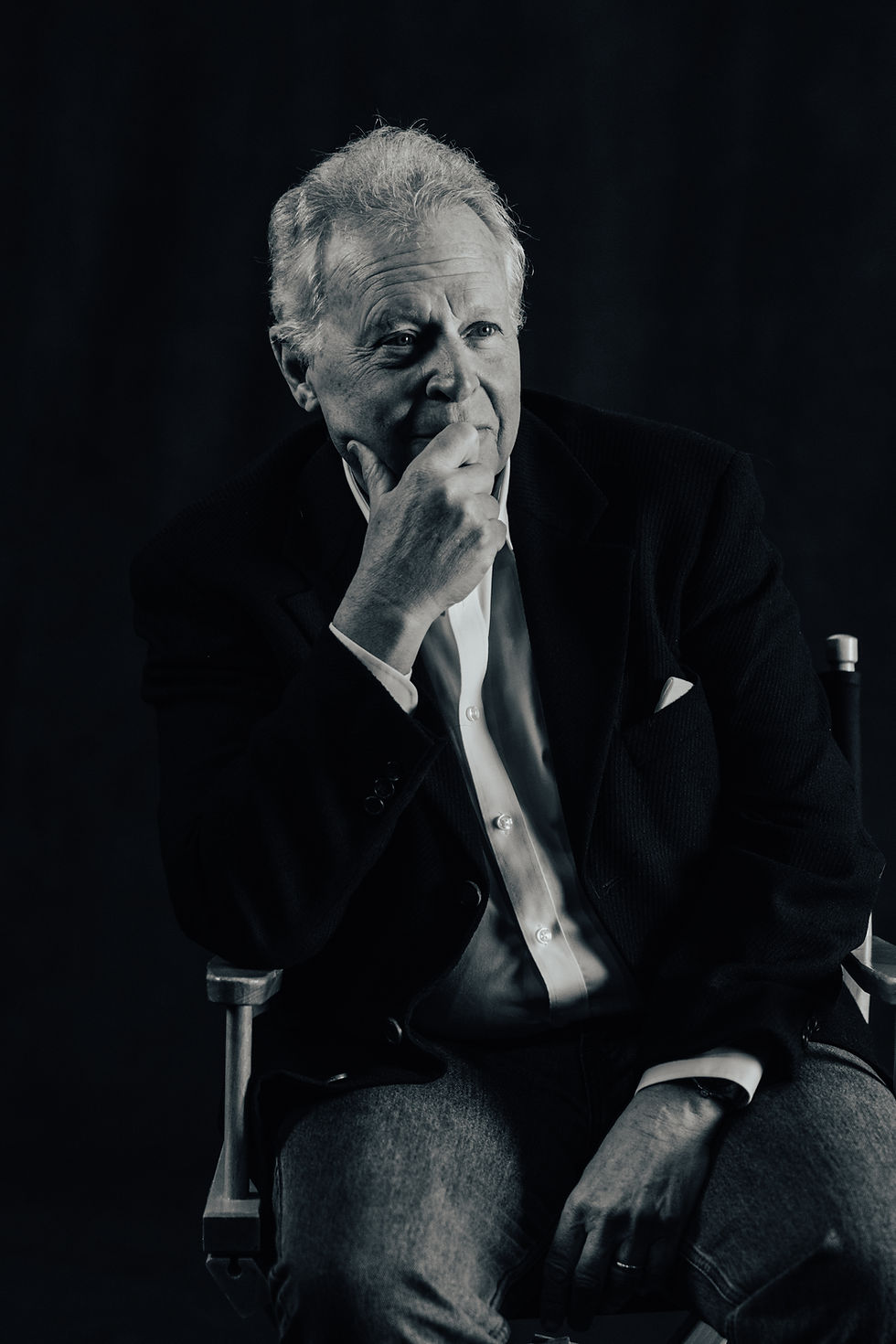

Greg M. Bennett
Author of: “I Can Make Caffeine Nervous”


Comments